

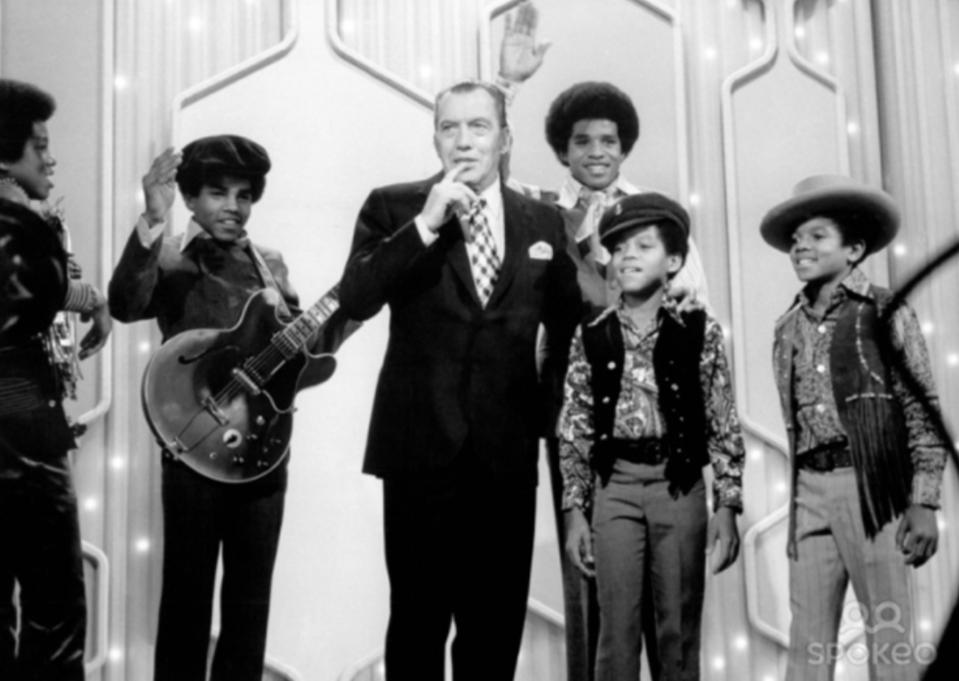
Ed Sullivan welcomes the Jackson 5 to his popular CBS TV show
Courtesy of Netflix
Ed Sullivan, a name synonymous with American television, was more than just a host; he was a cultural icon who shaped the landscape of music and entertainment. Best known for introducing legendary acts like Elvis Presley and The Beatles, Sullivan’s influence extended far beyond mere performances. For over two decades, millions of viewers tuned in every Sunday night, eager to see the diverse array of talent he showcased on his show.
“If you were on the Ed Sullivan Show, it meant you mattered,” says Sullivan’s granddaughter, Margo Precht Speciale, producer of the Netflix documentary Sunday Best: The Untold Story of Ed Sullivan. “He didn’t showcase only pop stars; he brought on opera, ballet, and Broadway artists, as well. He trusted the audience to care about all of it and made culture feel accessible to everyone during that time.”
Ed Sullivan talks with the members of the Beatles on the set of his TV variety series, on February 9, 1964.
NY Daily News via Getty Images
Originally titled The Toast of the Town when it premiered in 1948, the show was later renamed The Ed Sullivan Show. Sullivan, who began his career as a print journalist and Broadway columnist for The Daily News, had a keen eye for talent. His connections with New York entertainers helped him curate a lineup that reflected the vibrant cultural tapestry of America.
However, Sullivan’s journey was not without challenges. The show aired during a time when America was grappling with segregation, and there was significant pressure to feature only white guests. Despite this, Sullivan stood firm against political pressures, refusing to exclude Black artists from his show. “He admired talent, and that’s what it came down to,” says Speciale. “It wasn’t about the color of your skin or your background. He really only cared about talent.”
Ed Sullivan on the set of his weekly variety show.
Bettmann Archive
The documentary Sunday Best delves into Sullivan’s commitment to highlighting Black artists and culture during a time of racial strife. While the nation was divided, his show became a platform for a multicultural blend of music, introducing audiences to the likes of Harry Belafonte, a young Stevie Wonder, and the Jackson 5. Even when CBS attempted to ban Belafonte due to his civil rights activism, Sullivan invited him on the show, demonstrating his unwavering support for artistic expression.
Netflix documentary “Sunday Best: The Untold Story of Ed Sullivan” is streaming now
Courtesy of Netflix
Speciale emphasizes the importance of contextualizing Sullivan’s story within the broader historical landscape. “One of the things that was really important when we were making this documentary is not to just tell my grandfather’s story, but also show what was happening in history outside the stage door,” she explains. This approach reveals the significant challenges Sullivan faced while promoting diversity on his show.
Despite warnings from CBS censors to avoid physical interaction with Black guests, Sullivan greeted every performer with warmth and grace, embodying his authentic self. “He wasn’t going to let people tell him how to act or what he was supposed to do. He just led from his heart,” Speciale reflects.
Ed Sullivan and Harry Belafonte
Courtesy of Netflix
The documentary also provides a glimpse into Sullivan’s personal life, revealing his background and relationships. He was a close friend of Bill “Bojangles” Robinson, who performed on the show for free during its early days. When Robinson passed away, Sullivan honored him by organizing a beautiful funeral, showcasing his deep respect for the artist and their friendship.
Nat “King” Cole chats with Ed Sullivan during show appearance May 16, 1954 in New York City, New York.
getty
Through her research for the documentary, Speciale has gained a deeper appreciation for her grandfather’s courage and contributions to American culture. “One thing I kept thinking as we were making this documentary is we hear so much about ‘influencers’ today, and I realize he was an influencer even before we had that word,” she notes. While Sullivan may not have identified as a civil rights activist, his actions spoke volumes, making a significant impact in a quiet yet powerful way.
View of the funeral cortege of Bill “Bojangles” Robinson, as it passed through Times Square.
Bettmann Archive
As audiences revisit the legacy of Ed Sullivan through Sunday Best: The Untold Story of Ed Sullivan, they are reminded of the profound impact he had on American entertainment and culture. His commitment to showcasing diverse talent and breaking down racial barriers continues to resonate, illustrating the power of television as a medium for change.
Margo Precht with her grandfather, Ed Sullivan, on the 22nd anniversary of his CBS TV show. (1970)
Courtesy of Netflix
In a world where the influence of media is more pronounced than ever, Ed Sullivan’s legacy serves as a reminder of the importance of representation and the celebration of talent in all its forms. His story, as told through the lens of his granddaughter, not only honors his contributions but also inspires future generations to embrace diversity and creativity in the arts.
Portrait of TV host Ed Sullivan circa 1948.
Getty Images
